
What can counselling offer?
If you are reading this, you are probably wondering whether it’s going to help talking to someone outside of your immediate family and friends and whether you will be able to find someone you can trust and confide in . You may wonder whether it can help you at all? There are so many reasons why people come to therapy and it may be that you are not even sure of what is wrong, just a sense that things are not right and you can’t fix this on your own.
The relationship with your therapist will give you a safe space to work through your feelings. In time you will learn to recognise your emotions, name them, feel them and work through them. As you process and re-frame your experience new emotions will emerge and you may feel lighter and more sure of yourself.
Some of the reasons that people seek therapy are listed below, but this is by no means an exhaustive list, so don’t be discouraged if it’s not you:
Anxiety: Levels of anxiety can vary from feeling restless and unsettled all the time, often seeking distraction from your thoughts to full blown panic attacks that can have debilitating physical symptoms. Anxiety is a natural response by the body to threat, but in modern life our stress levels often evoke a constant feeling of danger in our bodies. Working out what is happening physically and what is triggering the response is a great place to start. If you begin to feel more in control, managing your symptoms, your anxiety will lessen.
Depression: Depression is often caused by being in a situation that you can’t see a way out of. You give in and you sink into yourself and feelings of hopelessness overtake you. Often a part of you is suppressed and you are not able to be your ‘real’ self. Counselling will give you a place to explore what you are feeling and to tell your story. Off-loading your feelings in a place where you are really heard and listened to, can be a great help.
Domestic Abuse: This may go on behind closed doors but it’s much more common than a lot of people realise. Abuse does not refer just to violence alone, but is often accompanied by gaslighting, narcissistic behaviours, sexual abuse, emotional control and financial abuse. Why not just leave? It’s never as simple as that … children, financial dependency, social judgement, and the loss of a dream that you were manipulated into believing. Counselling support can be vital in processing what has happened to you at your own pace and with unconditional acceptance.
Grief/Loss: You have lost someone significant in your life and coping with this loss can be confusing, like an illness that is unexplainable in words. The depth of your grief will reflect the depth of the relationship you had with the person who has gone. It may have been sudden and expected, and you are left in a vacuum of disbelief – or it may have happened after a long illness during which you experience anticipatory grief, knowing that you are losing the person you love even though they are still here. Every loss is hard and will leave behind a roller coaster of emotions to cope with – this is where counselling can help you make sense of the loss and give you the space you need to grieve.
Relationships: You may want to improve an existing relationship or work on your future ones. Our ability to connect as humans is essential for our wellbeing, but we can sometimes slip into old patterns of behaviour and wonder why we drive people away or run away ourselves. If we have never experienced a healthy relationship, then we may be unsure what to expect and how to play our part. We tend to rely on our own early experiences, and we are not all lucky enough to have had good role models.
Neurodiversity: We all have brains that are different from each other with natural variation in how people think, learn, communicate, and experience the world. It’s not a disorder or deficit, or ‘something wrong with you’ it’s simply a different way of being. If you have recently been assessed for autism/ADHD or you have just been through that process, then counselling can be a great place to explore your feelings, hopes and fears. You might want some support to explore and celebrate who you really are and how you navigate the world around you.
Counselling can be delivered in a number of different ways and some will work better for you than others. We can adapt to suit you, whether it be telephone, or Video link or face to face. You don’t need any special software or equipment.
Videolink: We use secure platforms, such as Google Meet. We will send you a link a few days before and all you need to do is click on the link and press ‘join’ to come into the session. This method works best on a laptop or tablet where you have a reasonable size screen and built-in or separate webcam. It can be done on your smartphone as second choice if you don’t have a laptop or tablet. You will need a private room where you won’t be overheard or disturbed and a password protected log in, if you are using a shared computer. We offer counselling to clients in the UK, all major cities such as London, Manchester, Cambridge, Bristol etc and also across Europe: France, Germany, The Netherlands, Scandinavia, Spain and Italy.
Phone: you will need a quiet place where you won’t be interrupted and you can sit comfortably and talk without being overheard. If you are using your mobile phone then you will need to be in a place with a reasonable signal strength so that we can hear each other.
Face to face: Availability of face to face counselling will depend upon where you live and whether it’s convenient for you to get to the counselling room. We have a private, comfortable room in Hamlet Road, central Haverhill with off-street parking and toilets. It is very close to the main shopping area and bus links.
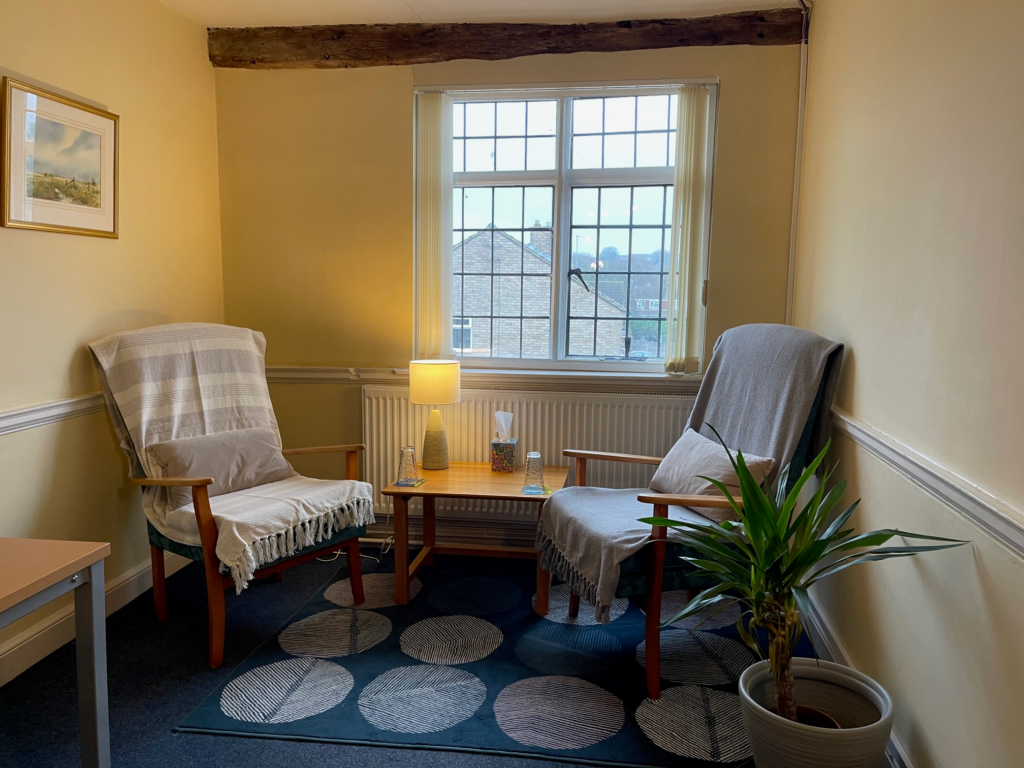
If you need an accessible room, we also have use of a room at the Epicentre Haverhill up to 4 pm where there is parking, level access for impaired mobility, and an accessible washroom.
Walk and Talk: Walk and talk therapy is held outdoors in a public green space and gives you a chance to connect with nature whilst participating in your counselling session. It is held at a pace that suits both client and therapist, and a view will be taken on the day if the ground conditions or weather might make the session unviable. Mutually agreeable venues can be discussed at assessment stage and risk assessments will be carried out for the particular factors relating to working outdoors .
Your privacy
We believe that your privacy and personal data should be protected at all costs which is why all counsellors are answerable to their professional body and agree to be be bound by their code of ethics, values and principles. This will be explained to you during your first session and you can ask to see a copy of the Code of Ethical Conduct. We take the GDPR (data protection) regulation very seriously and we each register with the Information Commissioner’s Office. We only keep minimal information on our clients, and any notes are anonymised to protect your identity. There are only a few exceptions where we would need to disclose information, such as if we were aware that someone was going to come to serious harm or a law might be broken.
Let us help?
Data Protection Regulation Certificate No: ZB440037